British Museum, London, 18 May 2026
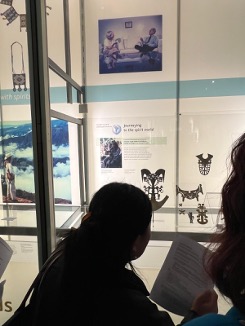
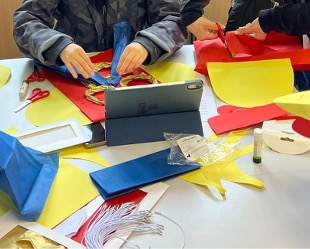
On 18 May 2026, ENACT visited the British Museum with eight MA students studying TESOL, Intercultural Communication, and Museums and Galleries in Education. The session invited participants to explore Colombian masks through museum collections, online research, digital learning activities, creative making, and embodied performance.
"A mask behind glass can be appreciated as an artefact, but when it is worn on a face it becomes much more personal and dynamic. Wearing the mask brought the culture to life in a way that viewing it in a display case could not. Some meanings associated with movement, performance, participation, and identity only became apparent through the practical activity."
The visit began in the museum galleries, where students observed Colombian masks on display and reflected on their visual qualities, cultural meanings, and role within festive and performative traditions. Participants then extended their enquiry by using the British Museum’s online collections to investigate objects that were not currently on display, allowing them to compare the physical gallery experience with the wider possibilities offered by digital museum resources.
Students also engaged with an ENACT activity focused on a Colombian carnival mask: Como hacer una mascara marimonda para el carnaval de Barranquilla on https://enacteuropa.com/?q=node/525
Through this task-based learning experience, they explored the cultural context of the masks before creating their own. The activity moved beyond observation: participants made masks, wore them, and danced with them, considering how meaning changes when an artefact is activated through the body, movement, and social interaction.
One of the participants said:
"
In the museum, I noticed a lot of engagement with the artefacts and displays. The masks were visually striking and encouraged curiosity about their cultural significance.
Online, I found information that was lacking in the physical space. The digital resources provided useful background and context that helped me understand the masks and the carnival more fully.
In ENACT, I understood the value of task-based learning. Engaging with the artefacts through purposeful activities made the learning experience more meaningful and memorable.
While making the mask, I realised that peer interaction was valuable. Discussing ideas and sharing observations with others helped deepen my understanding.
When I wore and danced with the mask, I felt more connected to the festival experience. It gave me a greater sense of how the mask functions as part of a living cultural practice rather than simply as a museum object.
Learning happened through interaction with artefacts, peers, and practical tasks. The combination of observation, discussion, creation, and performance supported learning in different ways.
One thing I would still want to ask a carnival participant, maker, or dancer is, "How did you learn about this?" I would be interested to know how knowledge and traditions are passed on within the community.
A mask behind glass can be appreciated as an artefact, but when it is worn on a face it becomes much more personal and dynamic. Wearing the mask brought the culture to life in a way that viewing it in a display case could not. Some meanings associated with movement, performance, participation, and identity only became apparent through the practical activity. At the same time, the classroom activity simplified the wider carnival context, meaning that some aspects of the collective atmosphere and cultural significance could only be partially experienced."